Learn

Infostealer

Infostealers silently harvest credentials and sensitive data, often serving as the initial access vector for devastating ransomware attacks.

What is an Infostealer?

An infostealer is a category of malware designed to silently harvest sensitive information from a compromised device. Unlike ransomware, which makes its presence obvious through encryption and ransom notes, infostealers operate covertly, often for extended periods without detection.

Once collected, stolen data is packaged into stealer logs and sold on underground marketplaces. These logs are purchased by ransomware groups, nation‑state actors, and fraud operators who use the stolen credentials to compromise corporate networks at scale.

Infostealers are distributed through phishing emails, malicious advertisements (malvertising), trojanized software downloads, and cracked application installers.
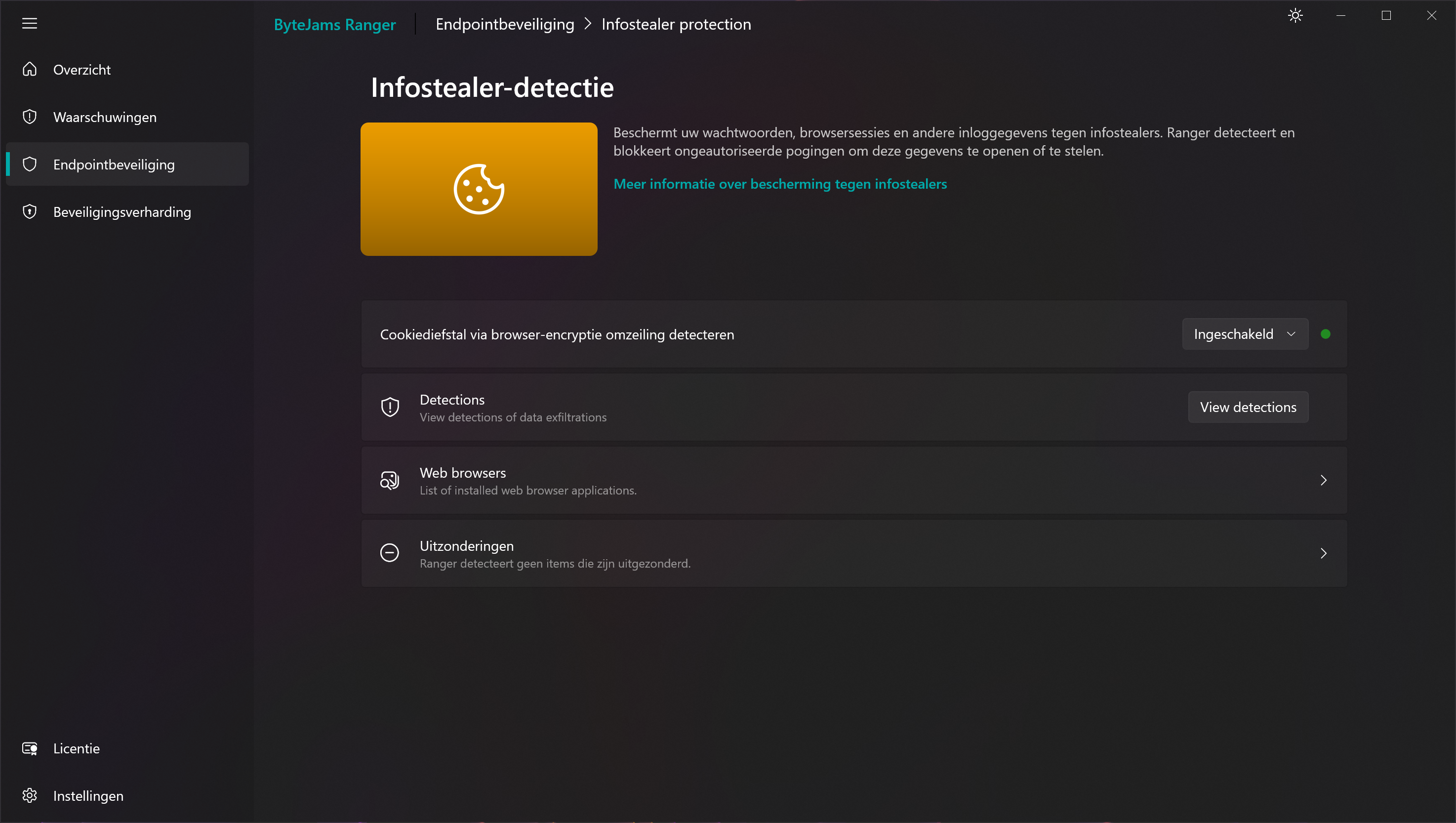
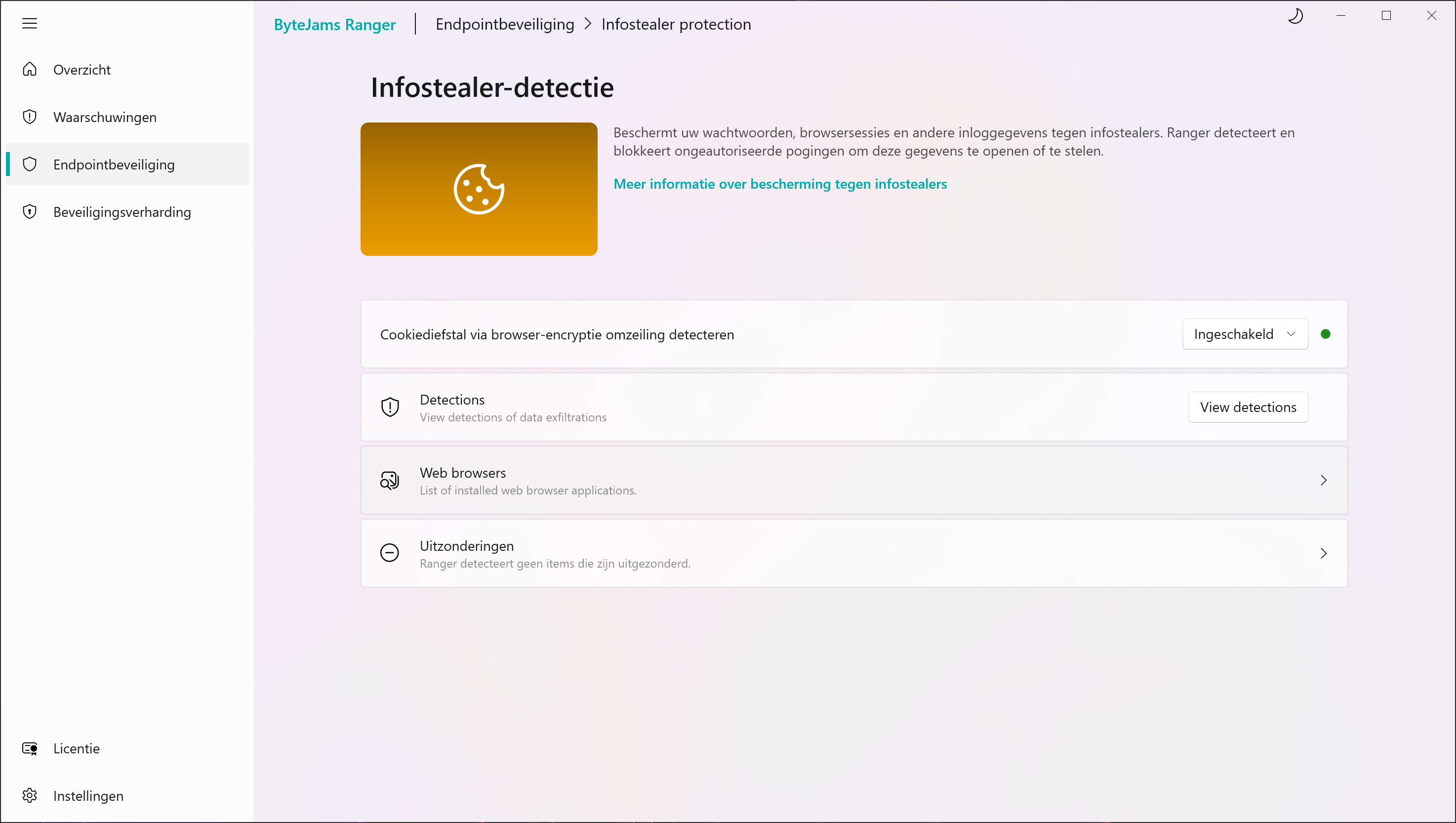
Ranger infostealer protection in dark mode Ranger infostealer protection in light mode

What Infostealers Target

Browser passwords & autofill data
Session cookies & authentication tokens
Cryptocurrency wallet files & seed phrases
VPN & RDP credentials
SSH keys & certificates
Email & messaging application data
FTP credentials
Corporate identity provider tokens

Session cookies are particularly valuable because they allow attackers to bypass multi‑factor authentication entirely, impersonating a legitimate user without needing their password. This technique, known as pass‑the‑cookie, is used to compromise cloud services, email accounts, and business applications.

The Role of Infostealers in the Attack Chain

Infostealer deployed
→
Credentials stolen
→
Logs sold on dark web
→
Initial access broker sells access
→
Ransomware operator deploys payload

Infostealers are frequently the first link in a ransomware attack chain. A single employee's compromised VPN credentials, harvested by an infostealer months earlier , can provide a ransomware group with the foothold they need to compromise an entire organization.

Evasion Techniques Used by Infostealers

Modern infostealers use sophisticated techniques to evade detection by security tools:

  • AMSI & ETW tampering: infostealers patch the Antimalware Scan Interface and Event Tracing for Windows in memory to blind AV, EDR, and XDR tools before executing malicious code.
  • Hardware breakpoint abuse: used to intercept and manipulate API calls without triggering standard hook detection, allowing the infostealer to read browser memory and extract credentials without raising alerts.
  • Sleep obfuscation: the malicious payload is encrypted in memory while sleeping, then decrypted only when executing. This defeats memory‑scanning tools and sandbox analysis.
  • Direct and indirect syscalls: bypassing user‑mode hooks placed by security tools by calling Windows kernel functions directly, without passing through monitored API layers.

How Ranger Detects Infostealer Behavior

Ranger's Application Guardrails detect the underlying techniques that infostealers rely on , without requiring prior knowledge of the specific malware strain, its hash, or its signatures.

  • Detect hardware breakpoint abuse and direct or indirect syscalls used to bypass security controls.
  • Uncover in‑memory tampering of AMSI and Event Tracing for Windows (ETW) used to blind AV, EDR, XDR, and MDR tools.
  • Identify sleep obfuscation techniques leveraged by stealth implants like Cobalt Strike, Havoc Demon, and Brute Ratel Badger.
  • Block the exfiltration phase: even if an infostealer successfully harvests credentials, Ranger's data exfiltration protection intercepts the upload to attacker‑controlled infrastructure.

By targeting the behavioral techniques rather than the malware itself, Ranger stops both known and unknown infostealer variants, including zero‑day strains that no signature‑based or AI‑powered tool has seen before.

Request a demo →